


What Community Asks Of Us

Day by day, I see the term “community” used in various ways; some loose, some more exacting, some a bit myopic, some a bit more intentional. At its most basic level, community is a group of people connected by shared place, identity, experience, or purpose. I imagine there was a time when community literally meant your neighborhood, your street, or your block, but in 2026, that isn’t the case. Even in these shared spaces and shared ideologies, there’s nuance. The monolithic nature of looking at a community one way is both played out and lazy; there are undoubtedly going to be subsets and subcategories of community, but at the end of the day, the alignment comes in on what you agree on, rather than where folks disagree. Community isn’t just a buzzword to encompass the handful of people who may agree with you – it’s deeper than that.
Being in community requires more than just being part of it. It’s also about contribution.
While I’m certainly not the arbiter of all things community, these contributions come in many forms, but what’s clear is the value of the work.
When we use language like “showing up,” the definition is clear. It’s about what we give to the communities we support, through presence, advocacy, and resources.
On a near-daily basis, I find what I give to my community comes back tenfold. It’s breakfast at Lincoln Square off 22nd & Illinois with a group of women who easily earn the title of auntie as they look at me with a gaze I’ve seen a thousand times that says, “I see you, but I expect more from you”. I address each of them as ‘Miss’ as I listen and value those who came before me. It’s walking into the neighborhood meeting late, with a loosened tie, but find a pocket to add perspective and facts as the discussion topic had come up four times earlier throughout the day. The head nods are affirming in ways that remind me of family reunions or head nods of approval at the Lockefield Annual Picnic. And while we’re here, let’s stop ascribing the feelings of three people as “everybody.” Because like Black lives and good albums, data and numbers matter too.
Influencers and micro-influencers are increasingly cultivating their own communities, often online, in ways that mirror the role traditional civic groups once played. These spaces excel at speeding up the process of connection, however shallow those connections may be. At the same time, participation in physical community life has declined significantly. These connections are slower, but they stick. There’s no hiding, just genuine engagement. While I’d never say I appreciate confrontation, there’s something about looking someone in the eye and addressing issues that matter – physical spaces allow for this. And I appreciate the smoke when it comes, I just ask that it comes correctly. Research shows membership in clubs and associations in the United States has fallen by roughly 25 percent since the late twentieth century, and today fewer than one in five Americans belongs to many traditional civic organizations, such as neighborhood associations, hobby clubs, or sports leagues. What replaced these spaces? What did we lose? We’ve lost deliberate intergenerational mixing unless it’s tied to professional endeavors – a huge miss as the OGs have something to say, but the next generation does too. Many of these groups are also aging, with younger generations joining at far lower rates than their parents and grandparents. As a result, the clubs and organizations that once anchored civic life continue to see declines, and the natural regeneration of membership simply isn’t happening at the pace it once did. The shift toward online presence has been sharp and a byproduct of ever-changing social norms.
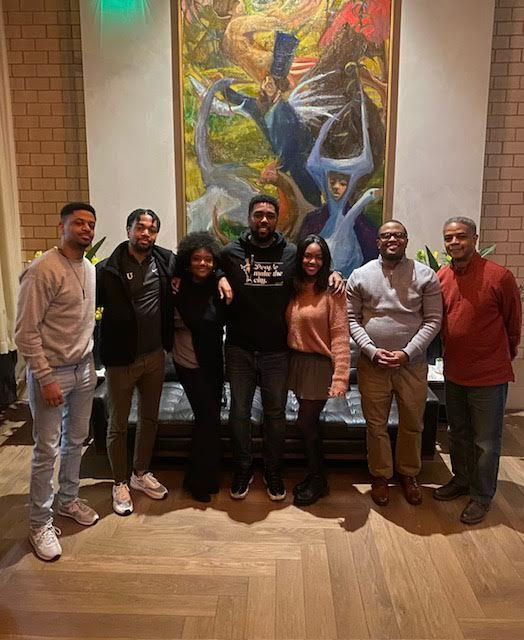
Which begs the existential question – how real are the things we see online played out in real life? Online support can feel episodic, as the work of community is, if anything, consistent – even when it may be inconvenient. While I have moments of thinking the internet hasn’t been a net positive on society, there are moments where technology, organization, and empathy align in ways unimaginable years ago. From viral moments of hardworking people losing jobs and having online communities show up in droves to support causes at the local level, there’s value, but again, how real is it? When those moments scale beyond individual stories, they often evolve into something larger.
Community, however, is not measured only by how loudly people respond in a moment, but by who remains once the urgency fades. Attention can be immediate, but commitment rarely is. It’s one thing to repost, donate, comment, or rally around a cause when the timeline is moving fast, and emotion is high. It’s another thing entirely to keep showing up after the algorithm has moved on and after the story is no longer new. Real community asks more of us than visibility.
It asks for follow-through and a willingness to remain present when the work becomes ordinary again. That may be the clearest difference between an audience and a community: an audience gathers around a moment, but a community stays long enough to carry something forward. If online spaces can spark awareness, then the real challenge becomes whether that awareness can mature into responsibility.
As institutions and organizations continue to be held accountable in ways unseen before, it’s the community of those holding said organizations accountable that are quickly gaining traction and social capital. Accountability is a good thing, but opposition alone can’t sustain a community. For certain communities, the “anti” sentiment is natural and bred deep within systemic issues – but more often than not, our problems are centered on interpersonal conflict. When communities become unwilling to engage or unwilling to listen to those who may disagree, we tend to head back to our own silos.
Communities may be built on shared principles, but principles alone don’t sustain them. At some point, it becomes a simpler question: are you someone people actually want to be around, someone others enjoy working with and spending time alongside?
Alignment in values might bring people together, but how we show up and treat one another ultimately determines whether a community holds.
Indianapolis is a city built on hard work and relationships. While there is a somewhat prescriptive idea of success here, I’d argue there are growing communities of people who recognize the power of working together and collaborating – people who value both tradition and innovation. It’s valuing people from various spaces, places, and ideas, not performatively, but genuinely, as these lived experiences add necessary perspective. They understand the importance of compromise in pursuit of a shared greater good, and they are willing to set aside personal wins in favor of collective progress. More and more, there’s a recognition that the strength of this city comes not from a few voices at the table, but from continually widening the circle so more people can take part in shaping what comes next.
My great-grandmother once said, “You can always make more pie.” In a city like this, the job is simple: keep making more pie, and make sure everybody eats.
Photo courtesy of and written by Greg Stowers, Jr.


Comments