


Community Development Through Presence and Partnership

Early in my career, I served as a Financial Empowerment & Community Development Officer, where much of my time was spent delivering financial education throughout the community. If there was a group willing to learn about money—whether in a classroom, a nonprofit program, a small business workshop, or a civic organization—I was usually there.
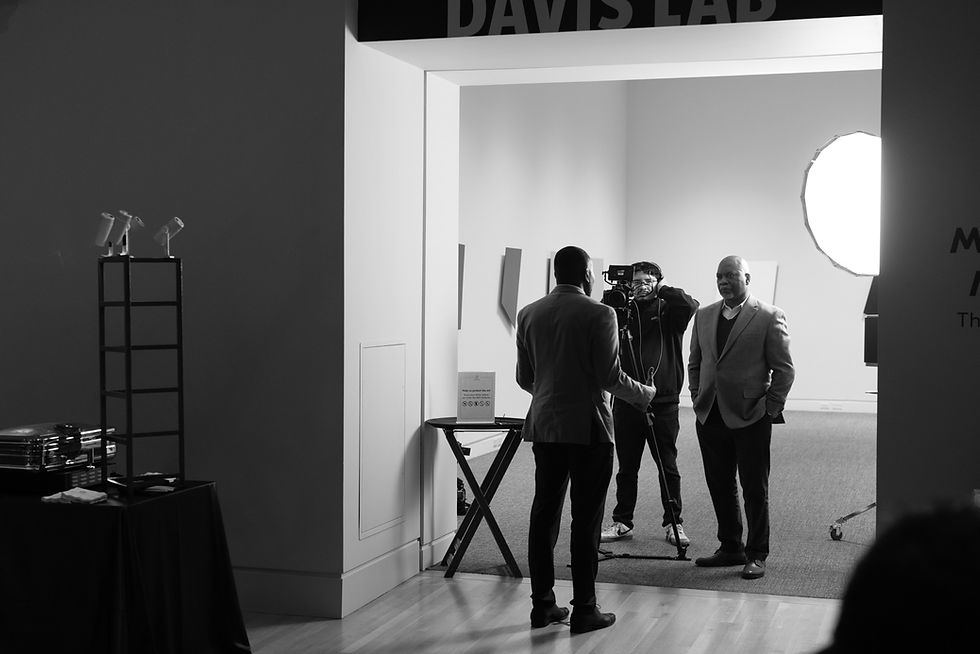
At the beginning, I thought the work was mostly about teaching financial concepts: Credit scores, budgeting, saving, and understanding how loans work. Those topics are important, and they help people better understand the financial system they navigate every day.
But over time, I realized that the most important part of the work wasn’t the presentation itself.
It was the relationships that formed around it.
You can analyze spreadsheets, read reports, and review needs assessments about communities, and those things certainly have their place. But they don’t replace spending time with people and hearing their questions directly. When you sit in a room with students, entrepreneurs, or community leaders and listen to the conversations happening around finances and opportunity, you begin to understand the community in a much deeper way.
What starts as a presentation quickly turns into a conversation. And those conversations often reveal more than any dataset ever could.
During those early years, two lessons began to shape the way I thought about community development and the role institutions like banks can play in supporting it.
The first lesson is simple: you have to understand the community you serve.
And the only real way to do that is to be present in it.
Every audience I worked with was different. A classroom of high school students asks very different questions than a room full of nonprofit leaders or small business owners. Students often want to know how to build credit for the first time or how to avoid financial mistakes early in life. Entrepreneurs tend to ask questions about accessing capital, managing cash flow, or structuring a business so it can grow sustainably.
But across all those audiences, one thing became clear over time:
People remember when someone shows up.
Even today, I occasionally receive calls from individuals with banking questions simply because they remember a class I once taught. Sometimes they don’t remember exactly what the presentation covered, but they remember the person who took the time to explain things.
That reinforced something important for me early on. Trust in communities is not built through marketing campaigns or brochures. It is built through presence.
When people see that someone consistently shows up, answers questions, and is willing to help them understand something complicated, that builds credibility in a way that traditional outreach efforts often can’t.
Another experience during that time made that lesson even clearer: There was an organization we had worked with closely through financial education programming. Over time, we built a strong relationship with their leadership and the people they served. Eventually, that organization was awarded a competitive grant that brought significant attention to their work. Once the grant was announced, they began receiving outreach from several financial institutions interested in working with them.
From a purely transactional perspective, it would have made sense for them to evaluate different options based on products, rates, or other financial considerations.
But when the decision was made, they chose to bank with Old National.
Not because of a specific product or pricing advantage, but because they felt the bank had invested in them long before the opportunity existed. They remembered the partnership that had been built through education, conversations, and support when there was no immediate transaction involved.
That moment stayed with me.
It was a reminder that relationships built through genuine engagement often carry more weight than any financial product ever could.

The second lesson that shaped my mindset is this: always look for ways to help someone move one step closer to their goal.
In community work and small business development, people often come with big aspirations. They want to start businesses, expand existing ones, purchase homes, or create financial stability for their families.
Those are meaningful goals, but the systems people encounter along the way can sometimes make those goals feel difficult to reach. Requirements, processes, and qualifications can lead to what feels like a quick “no.”
Early in my career, I began to realize that while the final answer might not always be an immediate “yes” immediately, there is almost always a way to help someone move forward.
Sometimes that means helping someone understand what they need to improve before applying for financing. It might involve helping an entrepreneur strengthen their financial documentation or connecting them with a resource that can help them develop their business plan.
Other times, it simply means pointing someone toward the next opportunity that can help them continue building.
Progress rarely happens all at once. More often, it happens step by step.
When people understand what the next step looks like, the path forward becomes clearer.
Today, I serve as a Community Lending Empowerment Specialist at Old National Bank, working within the Empowerment Small Business Loan Program. The program focuses on supporting underserved and underrepresented entrepreneurs who are building businesses and contributing to their communities.
In this role, I have the opportunity to work directly with business owners who are creating companies that provide services, generate employment, and invest back into the neighborhoods around them.
Small businesses play an incredibly important role in local economies. They are often the places where innovation happens at the community level. They create jobs, offer services that residents rely on, and help shape the character of neighborhoods.
But for many entrepreneurs, especially those in underserved communities, accessing capital can be one of the most challenging parts of building a business.
Programs like the Empowerment Small Business Loan Program are designed to help address that gap by creating pathways for entrepreneurs who may not always fit neatly into traditional lending models.
In many ways, this work feels like a continuation of the lessons I learned earlier in my career.
The conversations I had in classrooms, community centers, and nonprofit spaces often included entrepreneurs who had strong ideas and a clear vision for their businesses but struggled to access the financial resources needed to grow.
Those experiences reinforced the idea that financial institutions can play an important role not only by providing capital, but by understanding the people behind the businesses they support.
When banks take the time to engage with communities, listen to the challenges entrepreneurs face, and work collaboratively to find solutions, they can become meaningful partners in local economic growth.
Another thing I’ve come to appreciate over time is how important collaboration is in this work.
Community development is rarely accomplished by one organization alone. Nonprofits, financial institutions, educators, civic leaders, and business owners all contribute to the ecosystem that supports economic opportunity.

When those groups work together with a shared focus on strengthening communities, the impact becomes much greater than what any one organization could achieve on its own.
Financial institutions, in particular, have a unique role to play. Beyond providing financial products and services, they can serve as connectors—helping individuals and entrepreneurs access the networks, knowledge, and resources that support long-term success.
Looking back, the lessons from those early community presentations continue to shape the way I approach my work today.
First, understand the community you serve.
Second, always look for ways to help people move one step closer to where they want to go.
Those principles sound simple, but in practice, they require patience, consistency, and a willingness to listen.
When that mindset guides the work, the impact often extends beyond any single program, class, or loan. It becomes part of how communities grow, how businesses take root, and how opportunities expand for the people working hard to build something better.
And in many ways, that is what community development is really about: showing up, building relationships, and helping people move forward one step at a time.

Photos courtesy of and written by Moussa Ibraim


This was one of those posts where every section seemed to have a clear purpose. It answered a few things I had been wondering about and didn't wander away from the main point. That made the whole read feel much more worthwhile. I also came across Subway Surfers APK Community today while browsing similar topics, and it reminded me of the discussion here. I'd enjoy reading another article that dives a little deeper into some of the points you briefly mentioned.
I liked how the article stayed focused and didn't drift away from the main discussion. The explanations were balanced and easy to understand without being overly simplified. After finishing, I ran into visit here on another page connected to the same subject, and it brought one of your examples back to mind. It would be interesting to see another post covering a few situations that don't always follow the usual process.